How to Choose a Web Design Company in Cumbria
Published · Sebastian
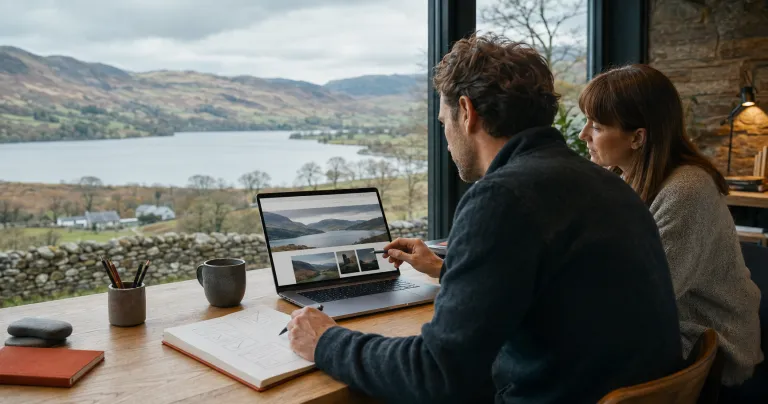
Search for web design in Cumbria and you’ll find everything from one-person freelancers to national agencies with a local landing page, plus a wall of adverts for DIY website builders promising a site in an afternoon. If you’re a business owner trying to choose between them, the options all start to sound the same.
They’re not the same. The gap between a website that quietly wins you enquiries for years and one that gets rebuilt from scratch in eighteen months usually comes down to decisions made before any design work starts - who you choose, what you ask them, and what you agree upfront.
This guide is for Cumbrian businesses weighing up that decision. It covers what a good web design partner actually does, the questions worth asking before you commit, and the warning signs that should make you walk away - whether you end up working with us or with someone else entirely. (If you're past the research stage and just need a designer, our web design in Cumbria page is the shorter read.)
Does a Cumbria-based web designer actually matter?
Honest answer: technically, no. A website can be built from anywhere. But there are practical reasons why working with someone based in Cumbria tends to go better for Cumbrian businesses.
The first is context. Cumbria’s economy is distinctive - tourism and hospitality around the Lakes, agriculture and food production, trades and manufacturing, professional services in the market towns. Much of it is seasonal, and much of it serves customers who are searching on a phone with patchy rural signal. A designer who understands that builds differently: lighter pages, clearer local search targeting, content planned around the seasonal peaks rather than published during them.
The second is accountability. Being able to sit down with the person building your website - in Penrith, Carlisle, Kendal, or wherever suits - changes the relationship. You’re not a ticket in a queue, and when something needs sorting after launch there’s a person you know at the end of the phone, not a support inbox.
The third is local search itself. If your customers are in Cumbria, you need a website structured to rank for Cumbrian searches. A partner who does local search engine optimisation day in, day out for businesses in the same county starts with a head start.
What to look for in a web design partner
Real work you can verify
Anyone can fill a portfolio page with polished screenshots. What you want is evidence: live websites you can visit, named clients, and ideally case studies that explain the problem, the approach, and what changed for the business afterwards. Ask to speak to a past client if you want - a confident designer won’t hesitate. Independent testimonials with real names and businesses attached count for far more than anonymous praise.
Performance on real connections
Cumbria has some of the most beautiful landscapes in Britain and some of its least reliable mobile coverage. Your customers are often on a phone, on 4G, somewhere between towns. A slow website doesn’t get a second chance in those conditions. Before you hire anyone, run a few of their recent builds through Google’s PageSpeed Insights - it’s free, and it tells you in seconds whether “fast” is something they say or something they do.
Accessibility as standard, not an extra
Around one in five people in the UK has some form of disability. A website that fails them turns away customers and, increasingly, invites legal risk. Good designers build to the Web Content Accessibility Guidelines (WCAG) from the start - proper contrast, keyboard navigation, descriptive alternative text, sensible heading structure. If a designer looks blank when you ask about accessibility, keep looking.
Ownership, in writing
You should own your domain name, your content, and your website. It sounds obvious, but a surprising number of businesses discover - usually while trying to leave a supplier - that their domain is registered in the designer’s name or their site is locked to a proprietary platform they can’t export from. Get ownership confirmed in writing before any work begins.
Think beyond the website itself
For a growing number of Cumbrian businesses, the public website is only half the project. The other half is the workflow behind it: booking and enquiry journeys that reduce phone admin, secure client areas where customers can submit documents or track progress, and integrations that connect the website to the tools you already use.
This matters when choosing a partner because the two halves are best built together. A holiday-let owner who needs availability and booking flows, a trades firm that wants quote requests routed properly, a professional practice that needs a client portal - each of these outgrows a template site quickly. If there’s any chance your project heads that way, choose someone who can build the system, not just the brochure. It’s worth asking how a prospective designer would handle it even if you don’t need it yet.
Questions to ask before you commit
A short conversation with the right questions will tell you more than any portfolio. Ask these:
- Who will actually build my website - you, or a subcontractor I’ll never meet?
- Will I own my domain, my hosting account, and my content outright?
- How do you approach search visibility - and can you show me a client ranking for searches that matter to them?
- What does the process look like from first conversation to launch, and where do I fit into it?
- What happens after launch - who handles updates, security, and problems, and what does that cost?
- If we add functionality later - bookings, a client area, an integration - can you build it, or will I need someone else?
If you want to see how we answer the process question, our approach is documented openly on our how we work page.
Red flags worth walking away from
Some warning signs show up again and again in projects that go wrong:
- A price before a conversation. A quote produced before anyone has asked what your business needs is a quote for a template with your logo on it.
- Guaranteed rankings. Nobody can guarantee a Google position. Anyone who promises one is either naive or counting on you not checking.
- Vague ownership answers. “It’s all handled on our platform” often means you can never leave with your website intact.
- No mention of performance or accessibility. If neither comes up unprompted, neither is being built in.
- Nothing in writing. Scope, deliverables, timescales, and ownership belong in a written proposal, not a friendly chat.
What does web design cost in Cumbria?
Less than in Manchester or London for comparable work, usually - but the honest answer is that price follows scope, and scope varies enormously. A content-led website for a village trades business and a booking system for a busy Lakes hotel are different projects with different amounts of planning, development, and testing behind them, even if both end up looking like “a website.”
What you should expect from any serious partner is a clear, fixed proposal before work begins - scoped around what the project needs to do, with the work broken down properly and no hidden extras. Be wary of comparing quotes by the bottom line alone: the cheap build usually saves its money on the invisible work - performance, accessibility, search structure, testing - which is exactly the work that determines whether the website earns its keep. For a fuller breakdown of what drives price up and down, read our guide to how much a website costs.
Where we work across Cumbria
Core Media Design is based in Penrith, and we work with businesses across the whole county - from Carlisle in the north down through Penrith and the Eden Valley to Kendal and the South Lakes, and throughout the Lake District including Keswick and Windermere. Distance is never the obstacle - we’re happy to meet in person anywhere in the county, or work remotely if that suits you better.
Talk it through with us
If you’re weighing up web design partners in Cumbria, we’d genuinely rather you asked us the hard questions above than chose on a glossy portfolio. Tell us what you’re trying to achieve - more enquiries, fewer manual steps, a website that finally shows up in search - and we’ll come back with the next sensible step. No jargon, no hard sell.
This article was last updated in July 2026. Search engine behaviour and tooling change over time - always verify current performance with your own testing.