Why One Homepage Cannot Rank in Eight Towns
Published · Sebastian
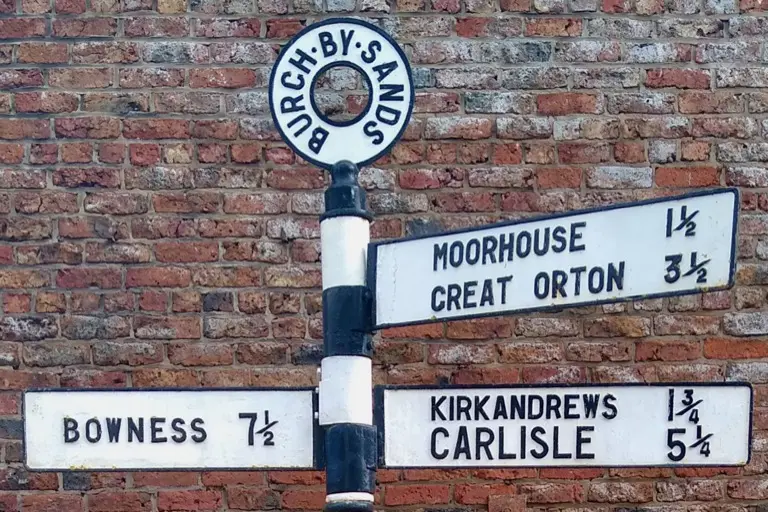
Somebody in Keswick types “plumber Keswick” into their phone. Somebody in Appleby types “plasterer Appleby”. They are different people with different jobs, and neither of them is asking whether you exist. They are asking whether you do that thing, there.
A homepage with a list of eight towns in the footer is the right answer to neither of them, and it is worth understanding why, because the fix is not complicated - it is just more work than most people expect. If you would rather have it done than explained, our local search work for Cumbrian businesses is the place to start. Otherwise, read on.
Every local search is two questions at once
Strip any local search back and it is asking two things. Can you do this particular job, and do you come out to where I am. A page only wins the search if it answers both on the page the searcher actually lands on - not one question on the homepage and the other buried three clicks away.
This is why the short, blunt, place-attached searches are the ones worth caring about. They are the searches with a job behind them. They are also the ones least likely to be swallowed by an AI summary, for reasons covered in what AI answers mean for getting found online: a two-word query with a town in it still produces a list of links, and somebody still clicks one.
Why the homepage cannot do it alone
A homepage is one page. It can say “we cover the whole of Cumbria”, and that is true and worth saying, but it cannot simultaneously be the best answer for a plumber in Keswick, a joiner in Kendal, and somebody in Tebay wanting a fence. Google picks the single page on the web that most closely matches what was typed, and a page that mentions eight towns in passing loses to a page that is about one of them properly.
The same is true of services. A page that lists twelve trades in a row is a menu, not an answer. The person who searched for hot lime pointing wants to land on a page about hot lime pointing, written by somebody who has done it.
So the structure that works is a page for each service you offer, and a page for each area you cover. Not a page for every possible combination - that way lies nonsense - but enough that whichever way somebody phrases the search, there is something on your site written for exactly that.
What that looks like in practice
We built exactly this for Eden Homeworks, a Penrith tradesman who covers the county. Twelve services, from plumbing to hot lime pointing, each with its own page. Eight areas, from Carlisle down to Kendal and across to Keswick, each with its own page too. Thirty-five pages in all, and every one of them is the right landing place for a search that would otherwise have gone to a national directory or a competitor.
We do the same thing for ourselves. This site has a page for web design in Penrith, where we are based, and separate pages for Carlisle, Kendal, Keswick and Windermere, all sitting under a county page for web design across Cumbria. We rebuilt every one of them this summer to the standard described in the next section, so you can judge for yourself whether we practise what we are about to preach.
What a real area page has to contain
This is the part that separates a page worth having from a page that will get you into trouble. An area page earns its place by saying things about that area that are true and that a local would recognise. If you could swap the town name for any other and nothing else would need to change, you have not written an area page. You have written a template.
What the work is actually like there
Housing stock varies enormously across a county. A plumber’s page for a town of Victorian terraces should read differently from one for a village of holiday lets or a new-build estate, because the jobs are different, the access is different, and the customer’s worries are different. Say what you actually find when you turn up.
The practical reality of getting there
How long it takes you to reach the place. Whether you charge a callout for it. Whether you will come out on a Sunday evening to somewhere forty minutes away. These are the questions people ring to ask, and answering them on the page saves everybody a phone call.
Proof you have been there before
A job you did in that town. A review from somebody who lives there. A photograph taken there. One genuine piece of local evidence outweighs three paragraphs of generic reassurance, and it is the thing a reader cannot get from anybody who has not actually done the work.
What the thin version looks like, and why it backfires
You have seen the thin version. Forty pages that all read “Looking for a reliable electrician in [Town]? We provide electrical services to [Town] and the surrounding area,” with the town swapped in by a script. Nobody reads them, nobody was meant to, and they exist purely to catch searches.
Google’s published spam policies have a name for this - doorway pages - and treat it as abuse. The risk is not that those particular pages do badly. It is that the whole site can be marked down for carrying them, which takes the pages you were proud of down with the ones you were not. Cheaper to build six pages properly than forty pages badly.
The test is simple. Would you be comfortable if a customer from that town read the page and knew you had written it? If the honest answer is no, do not publish it.
Keep it consistent with your Google Business Profile
Your Google Business Profile has its own idea of where you work, in the form of a service area you set yourself. The towns on your website and the towns on your profile should agree. If the profile says you cover Penrith and Carlisle and the website has pages for six more places, one of the two is wrong, and Google has to guess which.
The same goes for your name, address and phone number, which should read identically on your site, your profile, and every directory that lists you. Small inconsistencies are small reasons for Google to doubt it is the same business.
When not to build one
- If you would not actually drive there. A page is a promise. Do not promise Barrow if Barrow is a two-hour round trip you would quietly decline.
- If you have nothing local to say. Better to have six pages with substance than twelve with none. Add the seventh when you have done a job there and can write about it.
- If the town is too small to search. A hamlet of forty houses does not generate searches. Fold it into the nearest town’s page and mention it by name there.
Common questions
How many area pages should a small business have?
As many as you can write honestly, which is usually six to ten. Start with the places that account for most of your work and where you can say something true about doing the job there. A page for a town you rarely visit, with nothing local on it, is worse than no page at all - it is the kind of thin content Google's spam policies describe as a doorway page, and it can drag the rest of the site down with it.
Is a page for every town not just keyword stuffing?
It is if the pages are templates with the town name swapped in. It is not if each page says things that are specific to that place - what the housing is like, how long it takes you to get there, whether you charge a callout, a job you did there, a review from somebody who lives there. The difference is whether a local reader would recognise their town in it.
Should I have a page for every service as well as every area?
Yes, and these matter at least as much. Somebody searching for hot lime pointing wants a page about hot lime pointing, not a list of twelve trades with it somewhere in the middle. Service pages answer "can you do this"; area pages answer "do you come here". Between them they cover the two questions every local search is asking.
Do I need a separate page for every combination of service and area?
No. Twelve services and eight areas would be ninety-six pages, most of them empty. A page per service and a page per area is enough, as long as the area pages mention which services are most common there and link across. The combinations take care of themselves once both halves exist.
What if my Google Business Profile shows a different area from my website?
Make them agree. The service area you set on your Business Profile and the towns your website has pages for should be the same list. When they differ, Google has to guess which one is true, and it tends to trust neither. The same applies to your business name, address and phone number, which should read identically on every listing that carries them.
Where to start
Write down the six or eight places that account for most of your work, and for each one, three things that are true of doing the job there. If you can do that, you have the raw material for pages that will rank and that you will not be embarrassed by. If you would rather we did it, that is exactly the kind of build we do - web design and local search for businesses across Cumbria, from our base in Penrith.
This article was written in October 2026. Google’s published spam policies are the authority on what counts as a doorway page, and they are updated from time to time - check the current wording before relying on the summary here.